 |
Ian (@sirsnapalot) |
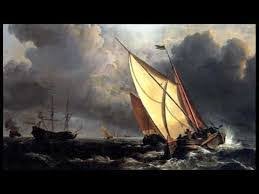
Eternal Father, Strong to Save
"Eternal Father, Strong to Save" is a British hymn traditionally associated with seafarers, particularly in the maritime armed services. Written in 1860, its author William Whiting was inspired by the dangers of the sea described in Psalm 107. It was popularised by the Royal Navy and the United States Navy in the late 19th century, and variations of it were soon adopted by many branches of the armed services in the United Kingdom and the United States. Services who have adapted the hymn include the Royal Marines, Royal Air Force, the British Army, the United States Coast Guard and the United States Marine Corps, as well as the navies of many Commonwealth realms. Accordingly, it is known by many names, variously referred to as the Hymn of Her Majesty's Armed Forces, the Royal Navy Hymn, the United States Navy Hymn (or just The Navy Hymn), and sometimes by the last line of its first verse, "For Those in Peril on the Sea". The hymn has a long tradition in civilian maritime contexts as well, being regularly invoked by ship's chaplains and sung during services on ocean crossings.
The original hymn was written in 1860 by William Whiting, an Anglican churchman from Winchester, United Kingdom. Whiting grew up near the ocean on the coasts of England, and at the age of thirty-five had felt his life spared by God when a violent storm nearly claimed the ship he was traveling on, instilling a belief in God's command over the rage and calm of the sea. As headmaster of the Winchester College Choristers' School some years later, he was approached by a student about to travel to the United States, who confided in Whiting an overwhelming fear of the ocean voyage. Whiting shared his experiences of the ocean and wrote the hymn to "anchor his faith". In writing it, Whiting is generally thought to have been inspired by Psalm 107, which describes the power and fury of the seas in great detail:
Within a year the text appeared in the influential first edition of Hymns Ancient and Modern (HA&M) in 1861 and its circulation became widespread throughout England.The text was substantially revised by the compilers of that edition. In response Whiting continued to revise his own text, releasing another version in 1869 and third in 1874, the last one incorporating most of the suggested changes by HA&M.
Meanwhile, John B. Dykes, an Anglican clergyman, composed the tune "Melita", in 88 88 88 iambic meter, to accompany the HA&M version of 1861. Dykes was a well-known composer of nearly three hundred hymn tunes, many of which are still in use today. "Melita" is an archaic term for Malta, an ancient seafaring nation which was then a colony of the British Empire, and is now a member of the Commonwealth of Nations. It was the site of a shipwreck, mentioned in Acts of the Apostles (chapters 27–28), involving the Apostle Paul.
Some went out on the sea in ships; they were merchants on the mighty waters.
They saw the works of the Lord, his wonderful deeds in the deep.
For he spoke and stirred up a tempest that lifted high the waves.
They mounted up to the heavens and went down to the depths; in their peril their courage melted away.

Psalm 107: 23–26 |
admin:
@sirsnapalot Ian, this is what I love heaing from you. So wonderful and just so very good. Thank you for the read as well. Loved and enjoyed this ♥
Mar 22nd 2020, 8:08 am Report
|
 |
Bev:
@sirsnapalot Enjoyed my listen here today Ian. I love hearing your speaking voice. ♥♫
Mar 23rd 2020, 11:09 am Report
|
 |
Joe Huber:
@sirsnapalot Hi Ian enjoyed my listen thanks for sharing.
Mar 23rd 2020, 10:10 pm Report
|
|
Ian:
@admin thank you so much for the time you get to listen I do appreciate it
Mar 24th 2020, 3:02 am Report
|
|
Ian:
@bevb I am so very pleased you enjoyed this Bev it is always a pleasure to be appreciated for these recordings
Mar 24th 2020, 3:04 am Report
|

 News feed
 Invite
 Images
 Members
 My Ads
 Audios
 Blogs
Blogs K-D Live Chat
 Videos
 Forums